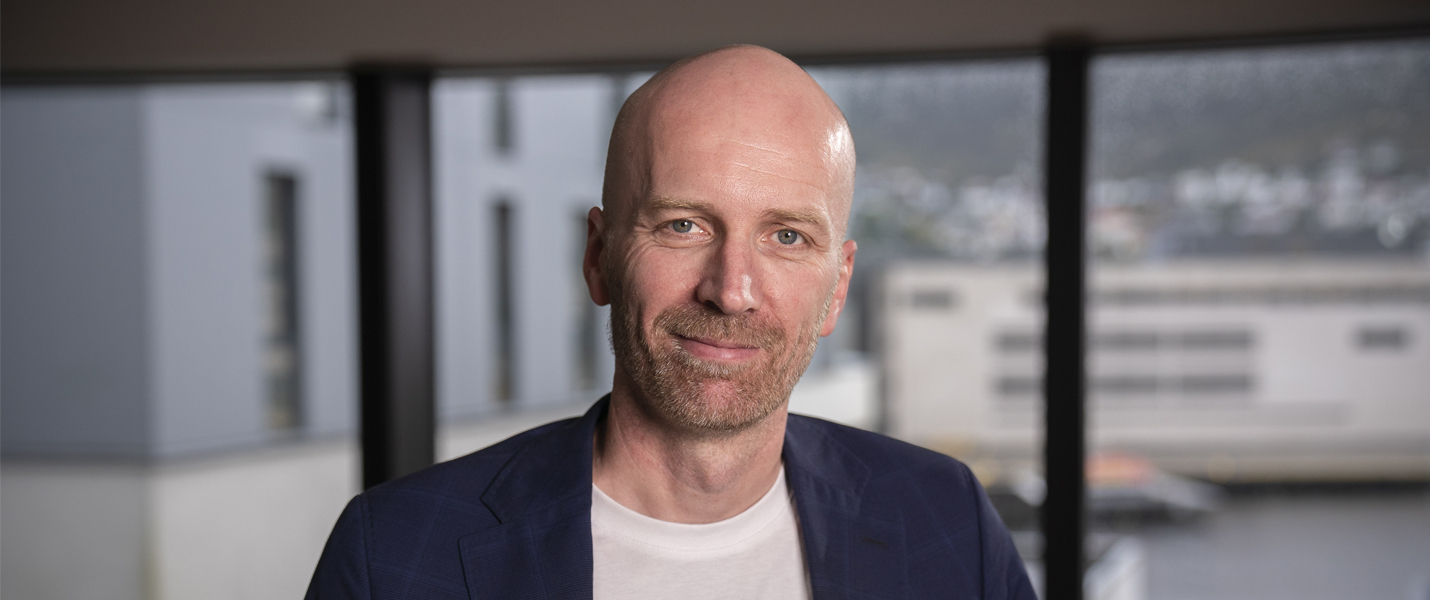


Gunnar Birkenfeldt has always been a builder.
Growing up in rural Norway, he was the kid who took machines apart to see how they worked, played the church organ, and later fell in love with mechanical watches. He was drawn to anything where many small components had to work together in harmony. That same instinct has defined his 20+ years in automotive and mobility.
From importing early Mini Coopers and flying in one of the first Tesla Roadsters to Europe, to scaling Porsche in Norway, launching an EV subscription fleet, and now building Casi’s platform, Gunnar has repeatedly worked in the gap between product innovation and market readiness.
Today, as Co-Founder and Chief Product Officer at Casi, he helps OEMs, leasing companies, and mobility providers scale modern, profitable fleet services by connecting technology, services, and financing into one integrated system.
This is his story and the system he’s building next.
A pattern that keeps repeating
Look across Gunnar’s career, and a clear pattern emerges. He has a habit of spotting the shift early, then quietly building the infrastructure around it. In the early 2000s, that meant parallel importing Lotus and Mini Coopers into Norway when there were no official importers, simply because he could see the niche before the market did. A few years later, it meant recognising the potential in Tesla and EVs long before the infrastructure, regulation, or demand were “ready.”
But he doesn’t stop at early bets. He operationalizes them in immature markets. With Tesla, that meant making U.S.-spec cars work on Norwegian roads and grids, and designing events and experiences that changed perceptions, not just printing new brochures. Over time, those experiments turned into systems: dealership operations became repeatable processes, and subscription pilots evolved into scalable fleets with standardized workflows.
And then there’s the discipline. At Porsche, that pattern showed up as volume and revenue growth built on margin control, brand consistency, and a tight operating rhythm. With imove and later Casi, it became the evolution from running a single service to creating the foundation others can build on.
That same pattern (early signal, hard execution, system-building, then disciplined scale) is the through line from Gunnar’s early years to what Casi now does for OEMs and FleetCos across Europe.
Let's take a closer look at these chapters in Gunnar's story.
Early years: curiosity, craft, and long bets
From a young age, Gunnar was drawn to how things were built and how they could be rebuilt. He played the church organ, grew fascinated with mechanical watches, and took bold risks early in life, including a 100% mortgage at age 18. Gunnar never holds back.
“I’ve always been drawn to long-term bets; to things that take time and precision but work beautifully when done right,” - Gunnar Birkenfeldt.
A great example of Gunnar playing the long game: Tesla and the EV revolution.
.png)
The first Tesla chapter: belief before proof
Arrival in a pre-infrastructure world
In 2008, long before Tesla had European operations, and when EVs were still treated as niche experiments, Gunnar and his team at Ferdinand Motor, a small specialist dealership, made a decision.
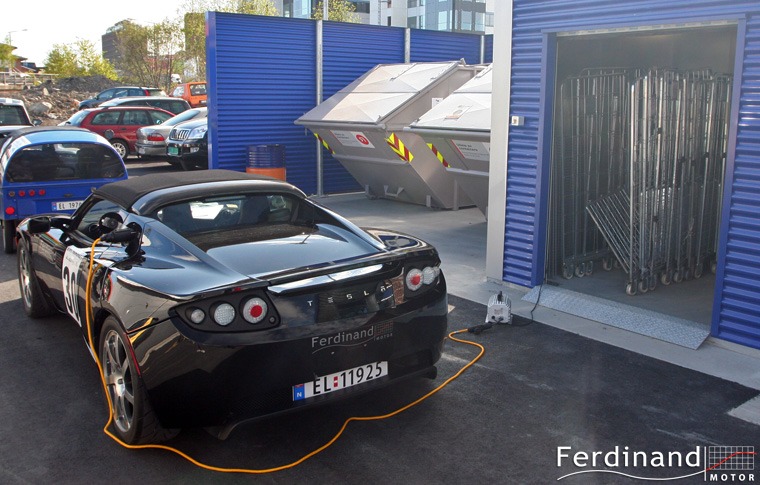
They imported a Tesla Roadster Founders Series car (VIN #24), widely regarded as the first customer-ordered Tesla Roadster to arrive and be registered in Europe.
It was flown in from California via Amsterdam with the entire battery pack disconnected, multiple cables unplugged by cautious handlers, and a U.S.-only charging system that didn’t fit the Norwegian grid…
Infrastructure didn’t exist. Documentation barely existed.
Instead of giving up, the team engineered a workaround: sourcing a 110–220 V transformer, experimenting with the first-generation charger, and dealing with a grid so unstable that charging would stop whenever the voltage fluctuated.
On April 29th, 2009, the car (on Norwegian plates ‘EL11925’) was registered and driving Norwegian roads.
Lesson: Infrastructure lag is always the constraint. If you want to move early, you have to build around it.
System resistance and regulatory skepticism
The technology wasn’t the only barrier. The system around it pushed back.
To get the early Roadsters registered, Gunnar had to sign liability waivers over concerns that electromagnetic radiation from the cars might interfere with traffic lights or automatic doors at shopping centres. Grid stability issues varied from street to street. Even basic assumptions about how a car should behave were up for debate.
Many of Gunnar’s customers came from IT and renewable energy, people who saw Tesla not as a gadget, but as the logical next step. One of them, Reidar Langmo, former chair of Think and co-founder of REC, became the first European customer to take delivery of that Founders Series Roadster. Gunnar made sure it arrived, worked, and could be used in real life.
Lesson: regulation and infrastructure always trail innovation. If you wait for them to be ready, you’re already late.
.png)
Public proof: EVs on ice
Gunnar didn’t just bring Teslas into Norway; he put them on stage.
At the Ferdinand Ice Festival, Tesla Roadsters were tested on a frozen lake alongside traditional sports cars. Press from 13 different countries attended. So did the American ambassador to Norway, who arrived with a 6.5-ton armored Cadillac Escalade and full security detail.
Skeptics questioned whether batteries could handle Nordic winters. The Roadsters drifted, performed, and survived the cold. The event helped dismantle the myth that EVs weren’t suited for Norway and contributed to the perception shift that later made the country one of Tesla’s strongest markets.
At that time, Tesla had no formal presence in Europe. As more orders came from Ferdinand Motor and visibility grew, Tesla’s leadership grew uneasy about losing control of distribution and customer experience. After tension and negotiation, a compromise emerged: Tesla would convert U.S. orders to European-spec cars and focus service on EU vehicles, while Gunnar’s team gained access, collaboration, and a practical role in shaping Tesla’s early story in Norway.
“We became part of Tesla’s unofficial expansion strategy. Norway turned into their test market, and we were at the center of it,” - Gunnar Birkenfeldt.
In total, Gunnar and his team helped bring around 50 Roadsters into Norway before Tesla built its own local presence. They later placed a 10MEUR batch order for early Model S cars, including Europe’s first Signature Series unit.
Lesson: belief opens the door, but execution earns adoption.
Porsche: discipline, brand, and operating cadence
If Tesla was the chaos chapter, Porsche was the discipline chapter.
As Sales Manager at Porsche, Gunnar and his team increased annual new-car sales more than tenfold in just 18 months. While some momentum came from new model launches, growth was primarily driven by bold sourcing decisions: consistently holding a broad and attractive stock mix so customers always had options, combined with strict brand governance and a disciplined retail operating cadence.
This, in turn, sparked hands-on experimentation with lifecycle economics, including leasing structures on vintage 911s where the team was confident three-year residual values would exceed 100%, despite bank systems being fundamentally unable to represent that reality.
“Experience isn’t what you add at the end. At Porsche, I learned it’s what you design first,” - Gunnar Birkenfeldt.
What also became clear during his time at Porsche was a deeper truth about customer behavior in the premium segment. Many customers were less attached to a specific vehicle than to the idea of access to the next car or the next experience. It was not uncommon for buyers to already negotiate their next trade-in while still standing in the delivery hall.
Ownership, in its traditional sense, was increasingly misaligned with how customers actually wanted to consume mobility. High upfront cost, rapid model cycles, and the emotional pull of “what’s next” created friction in a system built around static ownership. Observing this tension inside a world-class OEM environment planted early seeds around flexibility, lifecycle thinking, and alternative access models — insights that would later become foundational in Gunnar’s work with EV subscriptions.
.jpeg)
From imove to Casi: operational reality
In 2018, Gunnar co-founded and launched imove, the world’s first EV car subscription service. What began as a bold concept quickly became a full-scale operational stress test. In under two years, the team scaled to more than 1,000 vehicles and executed over 10,000 subscriptions across Norway, Sweden, and the Netherlands. Along the way, they learned (often the hard way) what it actually takes to operate fleets day to day: managing risk, handling demanding customers, coordinating logistics across markets, and protecting unit economics while scaling.
From day one, imove was built as both a service and a white-label platform. Operating the business in parallel with building the technology created a rare combination of hands-on operational insight and production-ready software. This foundation enabled Toyota to launch KINTO Flex, the world’s first OEM-led EV subscription service.
When the consumer-facing imove business was later acquired by DNB, it marked an inflection point rather than an endpoint. The experience, systems, and operational scars became the foundation for the next phase.
“The biggest barrier to scaling flexible leasing isn’t demand, it’s building a complete value chain with no weak links,” - Gunnar Birkenfeldt.
With both operational know-how and proven technology in hand, the strategic choice became clear. Rather than scaling as a capital-intensive consumer service, Gunnar and the team chose to scale through technology and infrastructure. That decision — to move from running one service to enabling many — became the bridge to Casi: a software platform designed to power end-to-end flexible leasing for OEMs and FleetCos across markets.
An integrated model: technology, services, and financing
Today, Casi’s work is built around a simple observation: Leasing and flexible fleet services only scale when three layers work as one system:
- Technology: A multi-tenant platform for digital sales, leasing, payments, fleet management, and analytics, built for automation and fast iterations.
- Services: Operational teams and processes that manage the full customer and vehicle lifecycle, based on experience from running thousands of live subscriptions.
- Financing: Off-balance structures and financing setups that enable competitive offers, multi-cycle monetisation, and proper revenue recognition over the asset’s life.
Most organisations run these layers in silos, leading to slow launches, manual workarounds, and margin leakage. Casi connects them into a single operating system that OEMs and FleetCos can scale with.
“We enable the complete value chain for modern mobility,” - Gunnar Birkenfeldt.
Why this matters for OEMs now
As ownership declines and direct distribution grows, OEMs need bundled, all-inclusive mobility offers that scale beyond pilots. Without aligned systems, promising concepts stall.
Casi closes that gap. When the full value chain works as one, launches accelerate, costs fall through automation, customer experience improves by design, and vehicles can be monetised across multiple cycles.
That’s real scalability, not experiments.
.jpg)
The human behind the platform
Gunnar may be a product and systems thinker, but he is also a gardener, father, and maker.
At his cabin, he tends a three-acre garden with hundreds of dahlias. He remains fascinated by mechanical watches and well-engineered objects.
He met his wife online in 1996, years before online dating became mainstream. He no longer plays the piano, but now spends much of his time on the sidelines, enjoying watching his daughters play football.
“The best systems, whether flowers or fleets, are built with care, tested in the real world, and designed to last,” - Gunnar Birkenfeldt.
That balance of craft, family, and long-term thinking is the same mindset he brings to product and platform decisions at Casi.
Looking ahead
Gunnar is convinced that the next decade in mobility won’t be defined by a new drivetrain or a single “hero product,” but by how well the value chain is designed. He believes the winners will be the ones who treat vehicles as multi-cycle assets rather than one-and-done leases, and who build deep integration between technology, services, and financing instead of stitching together siloed vendors.
Agentic systems will increasingly handle end-to-end workflows where today there’s still manual patchwork, and profitability will come from solid infrastructure rather than short-term pricing tactics. Most importantly, OEMs will need to treat leasing and flexible use as core products in their own right, not as add-ons at the edge of the business. At Casi, that’s exactly the kind of infrastructure he’s focused on building.
Interested in scaling your modern leasing or fleet service?
Contact us at casi.auto/contact, or connect with Gunnar on LinkedIn.


.avif)


.png)
.png)

.png)